
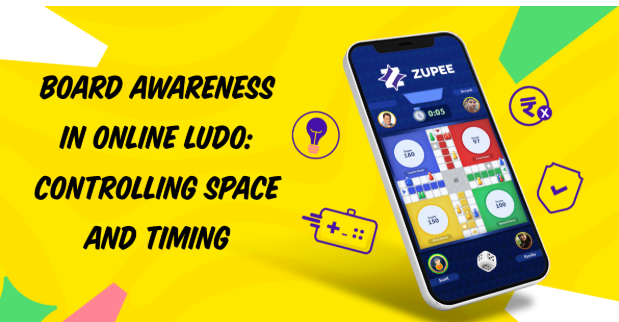
Online Ludo has developed to be more of a strategic game despite being a casual board game. Although chance is a factor, the board, space manipulation, and time management can provide a great playing advantage in any game. This paper will discuss the basics of board awareness in Ludo, and how to advance your performance in 1234 player games.
Understanding the Ludo Board
The Ludo board might appear to be easy, but every square is an opportunity. Learning the layout enables you to know where the opponents will move and how to do that.
The major areas to be considered are:
- Home Column: The zone of safety of your pieces. When there are many people on the board, getting tokens is a priority.
- Safe Squares: These would not allow you to lose your token. Strategize them to hold back your opponents or defend your pieces.
- Competition Routes: Monitor the direction your competitors are taking. Knowing their direction will help you not take unnecessary risks but take chances.
Dice rolling is just but part of being spatially aware by knowing how the board is structured.
Timing Your Moves
If you treat Ludo like any skill-based game, timing is crucial. A premature or tardy movement of a piece can produce a drastic change in the direction of the game.
These timing strategies can be considered:
- Early Movement: Transfer tokens to safety outside of your family home, but do not hurry into places of conflict.
- Mid-Game Planning: This means position your pieces so as to be able to block, open up safe jumps or plan safe squares.
- End-Game Precision: The last stage is one that needs to be calculated. The timing of the movement of a token can also ensure the avoidance of capture and win.
The time difference between casual play and competitive strategy is to balance risk and reward.
Controlling Space
The space in the board is minimal and needs to be utilized efficiently. Space control implies both offensive and defensive strategies.
For example:
- Offensive Control: Put your pieces in the situation in which opponents have to either take an additional path or face the risk of being captured.
- Defensive Control: Hold back important squares and do not allow opponents to move up. A well timed block may win the day in 1234 player games.
Space control enables you to play at your own speed as opposed to being a reactive player.
Planning Ahead
Ludo planning involves making plans ahead of the roll of the dice. Foresee potential consequences, take into consideration the standpoints of the opponents and determine the token to relocate in terms of safety and possible benefit. This is a proactive strategy that will make you less dependent on chance and increase the chances of winning.
The most winning Ludo players consider multiple moves. Planning involves:
- Considering possible rolls of dice and its results.
- Taking into account the standpoints of opponents and probable tactics.
- The choice of the token to move on the basis of risk analysis.
A proactive approach minimizes reliance on lucky rolls and maximizes decision-making power.
Observing Opponents
Monitoring your competitors is also a part of board awareness. Their habits and weaknesses can be displayed in patterns in their gameplay.
Questions to ask yourself:
- What works do they consider most important?
- Are they offensive or self-protective?
- What is their response to possible captures?
By analyzing opponents, you can anticipate moves, set traps, and avoid unnecessary losses.
Adapting Strategies for 1234 Player Games
The board is congested in 1234 player games and this enhances risk and opportunity. You must modify your plan between offensive and defense and decide the pieces to push forward and remain conscious of several movements of various opponents simultaneously. The issue of timing and position is more important to escape capture and be advantageous.
1234 player games introduce additional complexity. More opponents mean:
- Increased chances of being captured.
- Greater opportunities to form temporary alliances.
- A higher need for tactical positioning.
Adjust your strategy according to the number of players, balancing aggression with defense and timing with positioning.
Practicing Patience
Finally, patience is a key aspect of board awareness. Online Ludo, especially in 1234 player games often rewards thoughtful, measured gameplay over impulsive decisions. Avoid rushing pieces without considering potential threats and opportunities. Over time, disciplined play improves your overall understanding of space and timing.
Conclusion
Board awareness in Ludo is about more than luck; it’s about observing, planning, and controlling the flow of the game. By mastering space management, timing, and strategic planning, you can enhance your performance in both casual and competitive matches, especially in 1234 player games. While dice rolls are unpredictable, smart decision-making ensures that you remain in control of your gameplay.