
Introduction
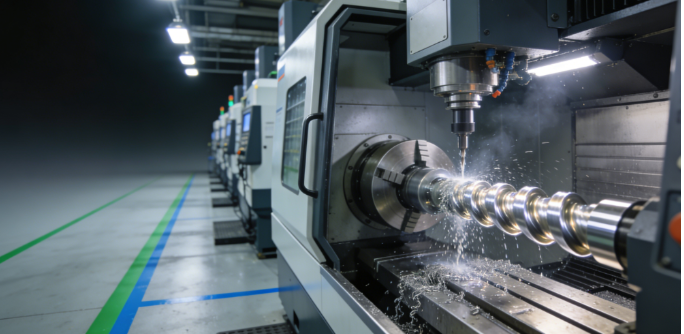
About one-third of startups suffer from serious delays in their projects. From initial concept to final production, disrupted supply chains, constant design revisions, and communication problems with several suppliers often lead to delayed startups that take longer to reach fruition. The main reason behind the delay is related to the traditional manufacturing process itself. Most startups hire different companies to help in the process of prototype design and tool making and the actual mass production. Such fragmented processes are bound to increase costs and waste time, lacking the standardization in terms of quality which results in costly mistakes. However, a solution would be collaborating with a company that handles all aspects of precision manufacturing in-house. Through utilizing CNC turning services on common materials such as aluminum and brass, startups could revolutionize their manufacturing process.
Why does early supply chain involvement fundamentally change the trajectory of product development?
Traditional practice waits until design completion before seeking manufacturers, which often leads to manufacturability issues.
HProactive DFM Analysis Reduces Late-Stage Rework
Bringing on an experienced turned parts supplier early in the Product Development process allows engineers to perform DFM analysis. An ISO 9001, IATF 16949, and AS9100D certified supplier can highlight any possible design issues such as thin walls, tight tolerances, or incorrect radiuses. This way, costly mold changes can be prevented from occurring at a later point during development.
Optimized Material Selection and Supply Chain Integration
- Material and Process Optimization
Choosing the right aluminum alloy for CNC turning balances strength and weight while reducing cycle times, directly improving cost efficiency.
- Shortened Development Cycles
By embedding the Supply Chain into the design phase, startups can shorten development cycles by weeks or even months, eliminate rework, and achieve lower total cost.
When facing complex parts, how should startups select the right precision CNC turning material?
The choice of material will affect part performance, costs, and machine ability. Two of the materials used most often in precision CNC turning include aluminium alloys and brass. In instances where low weight and high thermal dissipation such as in drone parts and enclosures are required, Aluminium CNC turned parts provide a high strength-to-weight ratio and high speed machining that makes them suited for high volume production.
Applications of Brass CNC Turned Parts
Parts where conductivity, corrosion resistance, and unique look are essential such as connectors and valves benefit from Brass CNC Turned Parts which provide unparalleled machinability as well as a bright golden hue.
Framework for Choosing Materials
- Aluminium
For applications that require lightweight and efficient thermal dissipation, aluminum is the preferred material because of its high strength-to-weight ratio and dissipation properties.
- Brass
In cases where high conductivity and durability are important, brass provides the desired qualities.
How can small-batch production achieve medical- or automotive-grade quality standards?
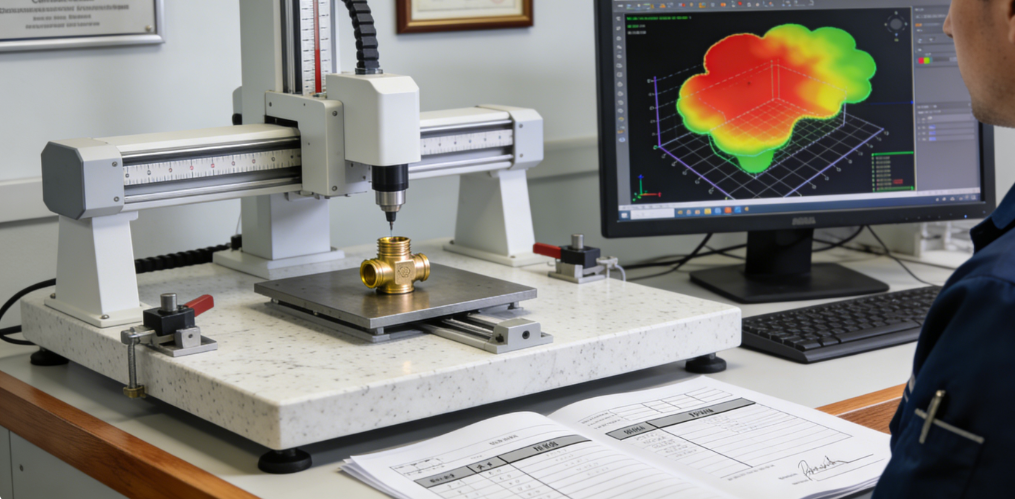
Low volumes may cause many startups to think that only large-scale production can guarantee quality assurance. This is a common fallacy that is refuted by professional manufacturers of brass precision turned components who always keep a strict quality control system irrespective of batch size. A qualified turned parts manufacturer carries out a total inspection process: initial article complete dimensional measurement using calibrated CMMs, hourly sample checks, and final report completion.
Take the example of a precision brass valve core : high precision brass parts small batches, through strict process control, even managed to obtain more than 99.8% yield rate, fully meeting zero-defect requirements in medical and automotive sectors. Such stability is possible only when the manufacturer integrates quality at each stagefrom verifying incoming materials to final packaging. Real-time monitoring of vital dimensions through advanced statistical process control (SPC) while being supported by traceable documentation of customer audits. For an in-depth study of how to obtain ultra-precision brass components, please consult this detailed guide on high precision brass parts.
How should startups plan from prototype to mass production to maximize cost efficiency?
Keeping costs under control is essential for startups. One of the ways that have been successfully used is to standardize hole diameters, chamfers, and thread sizes during the design phase so that the use of non-standard tools is minimized leading directly to reduced tooling costs and changeover time. In addition, by lowering setup complexity, startups will be able to iterate more quickly and will be able to lower their minimum order quantities. Besides choosing a supplier that will provide integrated brass turning services will free you from hidden expenses like multiple quotations, logistics, and administrative overhead.
For example, a provider that is able to handle both the turning and subsequent finishing steps like polishing and plating will be able to streamline the entire workflow thereby reducing lead times Quite a bit. Although per-piece pricing may seem higher initially, taking into account consistent quality, on-time delivery, and less management burden will usually give a better overall value when compared to fragmented sourcing. CNC turning services covering everything from prototyping to volume production allow startups to scale without unforeseen disruptions. This top-to-bottom approach not only reduces risk but also increases the return on investment. Find out more about how to optimize aluminum turning for cost and performance by reading this guide on precision aluminium turning.
How to evaluate a CNC machining supplier for long-term trustworthiness?
Selecting a partner is not simply about locating a processor. A seven-dimensional assessment setup consists of: relevant project experience, advanced equipment (like five-axis machining centers), industry certifications (ISO 13485, AS9100D), quality data transparency, communication responsiveness, and the willingness to give early engineering feedback. Most dependable suppliers of turned parts do not just wait for problems to occur but foresee them and give you design for manufacturing tips before the start of production. Companies like JS Precision act as examples of this method by setting up a smart factory ecosystem that offers real-time visibility of production and data sharing. A partner like this will not only help startups assemble a strong and efficient supply chain but also enable founders to focus on innovation rather than manufacturing issues.
Conclusion
In conclusion, for businesses that aim for rapid growth, successful product development does not only require groundbreaking ideas but rather their effective implementation in practice. With an optimal choice of a precision manufacturer with rich experience in engineering, robust quality control mechanisms, and advanced material supply chain management, it will be possible to sidestep typical problems related to inefficiencies and unnecessary expenses. Depending on whether one requires advanced Aluminium CNC Turning for innovative hardware development or Brass CNC Turned Parts for critical components, an efficient manufacturing approach is the key driver behind rapid development.
Do not lose valuable opportunities because of potential challenges in the manufacturing process. Get in touch with our engineers now, upload your designs, and you will receive a DFM assessment and a competitive quotation completely free of charge!
FAQs
Q1: What is CNC turning, and what types of parts does it suit?
A: CNC turning is a highly accurate machining operation whereby a workpiece is rotated and a non-moving cutting tool chips away the material. This technique is very productive for the manufacturing of all kinds of round, symmetrical parts like shafts pins bushings, and various fittings which are the main methods for the production of precision components.
Q2: Between aluminum and brass, how to choose the right material for my project?
A: The final decision really hinges on what the application takes. Aluminum alloys such as 6061 and 7075, are known for their excellent strength-to-weight ratio and thermal conductivity and are, Because of this, used in aerospace and electronics. However, brass types like C36000, are known for their outstanding electrical conductivity, corrosion resistance and they’ve also got a nice golden surface, so they are mainly used in electrical connectors and precision valves.
Q3: Can small-batch orders from startups obtain the same quality assurance as large volumes?
A: Sure thing. Good suppliers will use the same first-article inspection, in-process control, and final inspection methods for small and even larger batch sizes which are followed by providing full dimensional reports to ensure that each part will be as the drawings.
Q4: How can I ensure my design is manufacturable before production?
A: The best way would be to get the manufacturing experts involved in your design review before proceeding to production. Expert manufacturers are usually happy to offer free DFM comments, Warming up potential problem areas such as thin walls or sharp internal corners, and recommending modifications to prevent the manufacturing delay and additional expenses.
Q5: How long does it normally take from the submission of drawings till the delivery of the first parts?
A: Simple CNC machined parts have sample deliveries within 3-5 business days after the quotation is confirmed. Multi-axis parts could take up to 1-2 weeks.
Low volumes may cause many startups to think that only large-scale production can guarantee quality assurance. This is a common fallacy that is refuted by professional manufacturers of brass precision turned components who always keep a strict quality control system irrespective of batch size. A qualified turned parts manufacturer carries out a total inspection process: initial article complete dimensional measurement using calibrated CMMs, hourly sample checks, and final report completion.
Take the example of a precision brass valve core : high precision brass parts small batches, through strict process control, even managed to obtain more than 99.8% yield rate, fully meeting zero-defect requirements in medical and automotive sectors. Such stability is possible only when the manufacturer integrates quality at each stagefrom verifying incoming materials to final packaging. Real-time monitoring of vital dimensions through advanced statistical process control (SPC) while being supported by traceable documentation of customer audits. For an in-depth study of how to obtain ultra-precision brass components, please consult this detailed guide on high precision brass parts.
H2: How should startups plan from prototype to mass production to maximize cost efficiency?
Keeping costs under control is essential for startups. One of the ways that have been successfully used is to standardize hole diameters, chamfers, and thread sizes during the design phase so that the use of non-standard tools is minimized leading directly to reduced tooling costs and changeover time. In addition, by lowering setup complexity, startups will be able to iterate more quickly and will be able to lower their minimum order quantities. Besides choosing a supplier that will provide integrated brass turning services will free you from hidden expenses like multiple quotations, logistics, and administrative overhead.
For example, a provider that is able to handle both the turning and subsequent finishing steps like polishing and plating will be able to streamline the entire workflow thereby reducing lead times Quite a bit. Although per-piece pricing may seem higher initially, taking into account consistent quality, on-time delivery, and less management burden will usually give a better overall value when compared to fragmented sourcing. CNC turning services covering everything from prototyping to volume production allow startups to scale without unforeseen disruptions. This top-to-bottom approach not only reduces risk but also increases the return on investment. Find out more about how to optimize aluminum turning for cost and performance by reading this guide on precision aluminium turning.
H2: How to evaluate a CNC machining supplier for long-term trustworthiness?
Selecting a partner is not simply about locating a processor. A seven-dimensional assessment setup consists of: relevant project experience, advanced equipment (like five-axis machining centers), industry certifications (ISO 13485, AS9100D), quality data transparency, communication responsiveness, and the willingness to give early engineering feedback. Most dependable suppliers of turned parts do not just wait for problems to occur but foresee them and give you design for manufacturing tips before the start of production. Companies like JS Precision act as examples of this method by setting up a smart factory ecosystem that offers real-time visibility of production and data sharing. A partner like this will not only help startups assemble a strong and efficient supply chain but also enable founders to focus on innovation rather than manufacturing issues.
H2:Conclusion
In conclusion, for businesses that aim for rapid growth, successful product development does not only require groundbreaking ideas but rather their effective implementation in practice. With an optimal choice of a precision manufacturer with rich experience in engineering, robust quality control mechanisms, and advanced material supply chain management, it will be possible to sidestep typical problems related to inefficiencies and unnecessary expenses. Depending on whether one requires advanced Aluminium CNC Turning for innovative hardware development or Brass CNC Turned Parts for critical components, an efficient manufacturing approach is the key driver behind rapid development.
Do not lose valuable opportunities because of potential challenges in the manufacturing process. Get in touch with our engineers now, upload your designs, and you will receive a DFM assessment and a competitive quotation completely free of charge!
H2:Author Bio
This article was written by the engineers at JS Precision. Located in Dongguan, China, JS Precision is a precision manufacturer of custom parts for the global market using CNC machining, injection molding, and sheet metal fabrication. Each part produced is manufactured in accordance with ISO 9001, IATF 16949, and AS9100D specifications, ensuring that our parts always meet the highest level of quality.
H2:FAQs
Q1: What is CNC turning, and what types of parts does it suit?
A: CNC turning is a highly accurate machining operation whereby a workpiece is rotated and a non-moving cutting tool chips away the material. This technique is very productive for the manufacturing of all kinds of round, symmetrical parts like shafts pins bushings, and various fittings which are the main methods for the production of precision components.
Q2: Between aluminum and brass, how to choose the right material for my project?
A: The final decision really hinges on what the application takes. Aluminum alloys such as 6061 and 7075, are known for their excellent strength-to-weight ratio and thermal conductivity and are, Because of this, used in aerospace and electronics. However, brass types like C36000, are known for their outstanding electrical conductivity, corrosion resistance and they’ve also got a nice golden surface, so they are mainly used in electrical connectors and precision valves.
Q3: Can small-batch orders from startups obtain the same quality assurance as large volumes?
A: Sure thing. Good suppliers will use the same first-article inspection, in-process control, and final inspection methods for small and even larger batch sizes which are followed by providing full dimensional reports to ensure that each part will be as the drawings.
Q4: How can I ensure my design is manufacturable before production?
A: The best way would be to get the manufacturing experts involved in your design review before proceeding to production. Expert manufacturers are usually happy to offer free DFM comments, Warming up potential problem areas such as thin walls or sharp internal corners, and recommending modifications to prevent the manufacturing delay and additional expenses.
Q5: How long does it normally take from the submission of drawings till the delivery of the first parts?
A: Simple CNC machined parts have sample deliveries within 3-5 business days after the quotation is confirmed. Multi-axis parts could take up to 1-2 weeks.